Showing posts with label Teaching. Show all posts

Tuesday, October 29, 2013

Breaking Ground with Dory the Fish and Richard Fuller

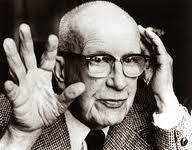
“You never change things by fighting the existing reality. To change something, build a new model that makes the existing model obsolete.” 


Great thinkers challenge us to do great things.  

It is easy to complain about the the status quo.  Certainly, part of the process of change is to become aware that the current state is not the desired state.  Fuller's quote, above, resonated with me.  His words called me to focus my mind and my intent more on building solutions, and focus less on identifying problems.  

Solution-building, after all, is the real work of change.  

Over the next several weeks, I will be exploring how to use my classroom as a model for educational change.  As my plan develops, I will share it here, with you.  

In the meantime, I expect I will continue to follow the words of Dory the fish, from Finding Nemo...

..."Just keep swimming!"

Tuesday, October 22, 2013

From Dream to Reality: A Professional Development Exercise

It is 5:17 am on Tuesday morning.  I am on vacation.  I can't sleep. Why?  Because I am now worrying about the amateur sand sculpting competition that I am participating in on November 22nd.  Grrrrrrrrrrr!  

Dreams are much MORE fun when they are simply dreams. As a risk-taker, my first obstacle is always myself. Once I commit myself, and start to take steps toward my dream, fear kicks in.  Fear of looking silly.  Fear of being judged. Fear of failure. With 55 years of experience you would think I would be at ease with risk-taking. The truth is, the more important something is to me, the more I sweat it. 

In the end, I know that I won't allow myself to be paralyzed by my fear.  I know that once I design the sculpture, practice in clay or some other medium, and show up on the sand, my love for this hobby will kick in.  I will begin to relax and sink in to that place inside of me where hand, heart, and creative spirit meet.  

Risk-taking connects me more deeply to myself and in turn, to all people. It tears away at my walls and reminds me of my humanness.  It puts me squarely in the role of learner.  As a teacher, I can't imagine a more powerful exercise.  

Monday, September 30, 2013

A Tarnished Dream

Fact 1:  Eighty percent  (80%) of Americans own seven percent (7%) of the wealth in the United States.

Fact 2:  That means, 10% of Americans own 93% of America's wealth. 

 reported by Ezra Klein, Washington Post

What does the distribution of wealth, in this country, have to do with education?  In the past, education led to increased wages, opportunity, and success. Today, our children see a hazy future, in an uncertain world, filled with inequity. There is a strong and undeniable connection between our economy and education. 
  1. The future.  Sure, children love to play. But, children also pay attention to the adult world.  They pay attention to the economic frustrations and challenges that their families face.  If a child's family struggles, the child knows.

  2. Inequity.  If a parent slings burgers for a living, chances are good that their children will find an occupation at a similar economic level.  Conversely, if a parent has economic position and power, their child will have a much greater chance of garnering economic opportunities.  Our children know inequity exists.

  3. The world.   Children know that some children are poor and some children are hungry. Children also know that some children live in nice homes, wear nice things, and go to nice places.  Our children know the world.
Education should be a tool for mobility.  If children work hard, they should see a future that is bright and filled with opportunity.  In the past this was actually true.  Today, however, our children know that their economic station is etched at birth. Schools cannot make the American Dream be true. Americans must make the American Dream be true.  Make no mistake, our children see us for exactly who we are.

Wednesday, September 25, 2013

Assessing What Matters

We do not expect the blind student to see, the deaf student to hear, or the physically disabled student to to run.  Why, then, do we require students with reading disabilities to read?  Isn't the true objective, the student's ability to digest and make sense of the material?

In this millennium,  there are many ways for the disabled reader to demonstrate his or her mastery of challenging concepts and text. Technological advancements make the delivery of auditory text instead of (or in addition to) written text a viable solution. Does the mechanism through which students' access content supersede the students ability to master the standard or learning objective in question?

Reading disabilities have yet to be acknowledged and treated in the same manner as any other human disability.  Though measures should always be taken to strengthen reading, when testing, students should be allowed to hear and read the subject matter.  This is not providing an unfair advantage, it is simply leveling the playing field and actually measuring student performance.

Friday, September 20, 2013

Educational Assessment: Is It Really that Hard?

Standardized assessments are not the work of evil-doers.  Though from ground-zero (the classroom) it can feel that way. The problem with standardized assessments is that they are standardized.  The intent behind standardization is to create a method of assessment that is objective. This sort of approach works well when testing tire safety, or performing other types of quality control tasks.  It does not work well with people.

Note to education policy and assessment specialists, people are not the same. 

Standardized assessments are cold and unfriendly.  Tires don't care, but people do.  Standardized assessments do not measure thinking, except in a very limited sense.  But, let's not throw the baby out with the bath water.  Let's not ditch assessments all together...at least, not yet.

Note to education policy and assessment specialists, trust teachers.

What would an assessment look like that accounted for differences in students and that trusted teachers to administer the assessment accurately and carefully?

Choice.  A one size fits all assessment model doesn't work.  Period.  Assessments must vary in flavor. A new assessment model could allow collaboration between the parent/guardian, student and teacher  to determine which assessment method would provide the best possible measurable outcome for the student.

Method.  Teachers are experts at rubrics.  Sample rubrics could be developed as they have been for some state-mandated teacher evaluation programs.  The work product or output of the assessment would vary, however, the objectives to be measured would remain the same. How hard is that?

Current state-mandated assessment models are not student-centered.  They focus on the ease of implementation for the state.  They focus on control not trust.  If we are to fix the education system we must fix the way we assess our students.  We must focus on building a new choice-based assessment methodology that allows all learners to communicate what they know and what they know how to do.

Saturday, September 7, 2013

The Applause

At the end of class, yesterday, the most amazing thing happened. My students applauded.  I can't tell you how absolutely flattered I felt, and humbled.  In my teaching practice, my goal is always to find ways to connect with students as they discover or uncover "knowledge".

My class is comprised of 5 students. My students, for whatever reasons, have demonstrated that they cannot participate, politely, in most other classrooms.  Thus, I have the pleasure of dedicating my day to their education.  I am their teacher.

On Fridays, we vary our routine to include different ways of reinforcing what has been learned Monday through Thursday of each week.  This can include educational gaming, experiments, and other student-selected curricular choices.  In many instances we are either engaged around a small table or on the floor.  Doesn't sound very studious, does it?

Yesterday, a Friday, students were at there desks.  I  decided to go "spelunking" during social studies (most people call it using the socratic questioning method).  Spelunking can be a rather tricky process. The goal must be very well thought out and the questions must help lead students to make connections, generalize concepts, or express novel ideas about the topic in question (pun intended).

As a teacher, there is nothing more rewarding than watching students think, become excited to share their thoughts, and then smile when they construct their own knowledge.  Yesterday, that is what happened.  The round of applause that I received from my students was kind and affirming.  The real gift, however, was watching each student uncover their love of learning.
Subscribe in a reader