Showing posts with label student-centered. Show all posts

Sunday, August 10, 2014

#EPIC Failure

We fail far more than we succeed.  It is our failures that allow us to move closer to our best. Failure knows no limits. It touches the old and the young, the wise and the numb. Everyone suffers a skinned knee and a wounded heart.

As a teacher, I feel that our curriculum says little about failure. Certainly, there are stories of failure that are told and gaffs in history that are reviewed. We examine the world in hindsight. But, we do not teach our students to examine themselves. 

We should. 

I would like to teach a course called, Failure.  As a part of this course, students would become intimately familiar with failure and how to move beyond it. They would examine their feelings and the reactions of others, including their peers, their parents, and their teachers. 

They would learn to identify the reasons for their failures and ways to rectify them moving forward.  They would learn to be experimental and take thoughtful risks. They would develop a metacognitive relationship with failure. The ability to embrace their wounds and analyze their actions. Failure would become a laughing matter. A part of life that is accepted and expected.

Students would become comfortable sharing successes and failures. Laughing, teasing, and bolstering one another. Facing their failures, with eyes open, and the tools needed to persist when success looms beyond their reach.


Monday, June 23, 2014

Words Matter

Words matter. They really do.  Our reality is shaped, at least in part, by the words we use. Sports psychologists are well aware of the impact of words on the performance of an athlete. Anxiety begins with negative self-talk intertwined with negative mental images. These words and images have the potential to cripple the performance of the most gifted athlete.  I know, I was one of those athletes.

Athletes aren't the only people affected by the power of words.  Words have universal influence. They effect all people.  They transcend culture, race, sexual orientation, religion, age, gender, and disability. Words matter.  Words are powerful.

Each generation modifies the language of prior generations. This past year, I have heard the use of the words kill, dead, death, shoot, die with increasing frequency, and in a variety of contexts. Most often, I hear these words from children and the media.

Yesterday, my son and his friend were playing Minecraft.  His friend kept saying, "Kill him! Kill him!" (I am sure there must have been some "googlies" lurking about). A few minutes later, I heard my son say the same words to his friend.

I asked the boys to have a chat with me.  I told them that it is hard for me to listen to them say "Kill him!"  I explained that killing results in death and that death is permanent.  My son rolled his eyes at me and said, "It is JUST a video game."   "I know, I know,"  I replied.  "But, it would be more accurate to say "Defeat him!  Since, the creeper will not really die, but spawn again."  The boys looked at each other, shrugged their shoulders and said, "Ok!"

For the remainder of their screen time, I reminded them, a couple of times, to switch from the word "kill" to the word "defeat".  They seemed to accept this modification to their language with little concern.  As a parent and an educator, I don't have to accept what the media generates and what our children and students repeat.  I  have a voice and a conscience.  Words matter. They really do.

Wednesday, June 11, 2014

The Practice of Love

I am passionate about love.  Not because I am an undiscovered Dali or MT (Mother Theresa), but because I am definitely NOT.

In my 40's I joined a meditation group.  At the beginning of each session, the leader asked the group to think of something that evoked the feeling of love. Something that made each of us FEEL love....a baby, an athletic team, a spouse or partner...anything.  I couldn't.  Nothing came. My heart felt nothing. My self-esteem took a plunge.

That was almost 16 years ago.  Today, feeling love is a central part of my day and my life.  Love is my compass.  Growing love is not unlike growing corn, tomatoes, or a student.  It takes time, commitment, and practice to get the outcome you want.

Many people are confused about the nature of love.  Love is not the same as desire or attraction. Scott Peck, does an outstanding job of explaining the difference between love and desire in his book, The Road Less Travelled. For a beginner, it is actually easier to discern what love IS NOT, than it is to discern what love IS.

On a pragmatic level, choices that are motivated by love tend to have better outcomes than choices driven solely by attraction or desire.  Attraction and desire are certainly a part of the mix...but their essence is not love.

As an educator, I often wonder why teaching love is primarily reserved for families and churches.  Love is a feeling and a practice. Love is a compass that can guide the most important life decisions.  My question is, does developing a student's practice of love conflict with a student's religious practice or, do these practices simply compliment one another? What do you think?

Saturday, May 3, 2014

The 21st Century School: Think Tank and Research and Development Organizations

Yesterday, I asked my 9 year old son (Turner) how he felt about his performance on the state-mandated assessment he had taken that day.   I felt relieved, of course, when he told me..."it was easy...just the same stuff we've already learned".

Turner is a case study of a kid who likes going to school.  Primary education can work for students who are comfortable with a social learning model.  I am concerned, however,  about his motivation as he reaches the middle school years.

These years comprise huge developmental changes for children across physical, cognitive, social, and emotional domains. They are "experienced".  They know what school is like.  A continuation of "more of the same" wears thin for these students. Instead, infusing the curriculum with a variety of pedagogical approaches centered upon problem-based learning, has the potential to re-engage the middle years student in the process of learning. Perhaps, to even ignite their love of learning.

In many ways, secondary students are ready to become a part of defining solutions to our world problems.  They are old enough to know that the world is not the illusion that we presented to them during their primary years. The illusion that we can protect them and shelter them from the problems that generations of world citizens have created.

Today, more than ever, students are savvy in ways that preceding generations were not.  They are both innocent and wise. Child-like and worn. They have glimpsed the real world and they know that there is much to do.

Saturday, November 9, 2013

Promoting a Compassionate Classroom


"If love connects us with others, personality must certainly be the mechanism through which love is perceived and understood." 
Julie Meyers, 2013

As an educator of seven different middle school students, misunderstandings between and among us occur with regularity.  The MBTI (Myers Briggs Personality Type) has documented 16 personality types. Each personality type has discrete preferences for interacting with and perceiving the world.   

In elementary, middle, and even high school, differences among people, are rarely approached from a scholarly perspective.  Most often, students are told that we are all different and that we need to learn to get along with others.  The behavior of "not getting along" is then redirected, referred, or disciplined.

As an educator, helping students to become cognizant of the variety of personality types in the world, may help to promote a more compassionate learning environment.  In the coming week, I will be informing my students about personality type.  They will  participate in an age-appropriate version of the MBTI.  Then, we will discuss how similarities and divergence among personality types affects communication, understanding, and learning.

To optimize student learning, my belief is, that the classroom environment needs to be infused with love, compassion, and understanding.  Raising student awareness regarding personality differences and learning styles is one step toward improving student performance.


Tuesday, October 29, 2013

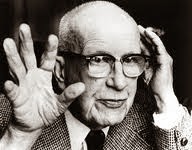
Breaking Ground with Dory the Fish and Richard Fuller

“You never change things by fighting the existing reality. To change something, build a new model that makes the existing model obsolete.” 


Great thinkers challenge us to do great things.  

It is easy to complain about the the status quo.  Certainly, part of the process of change is to become aware that the current state is not the desired state.  Fuller's quote, above, resonated with me.  His words called me to focus my mind and my intent more on building solutions, and focus less on identifying problems.  

Solution-building, after all, is the real work of change.  

Over the next several weeks, I will be exploring how to use my classroom as a model for educational change.  As my plan develops, I will share it here, with you.  

In the meantime, I expect I will continue to follow the words of Dory the fish, from Finding Nemo...

..."Just keep swimming!"

Wednesday, October 16, 2013

Finding Passion in School? Really?!?

Yesterday's post was all about me.  My artistic pursuits.  My connection to sand and soul when immersed in this art form.  Except that it wasn't all about me.  It was about each of us.  It was about our children, their lives, and their educational experiences.

When exploring my passion, I begin to see the world through an entirely different lens.  There is no negativity, no limits.  I begin to rely more on my gut and less on facts and reason.  Surely, all of us need a blend of both.  

In the world of schools, students never encounter a course called, "Finding my Passion".  We leave that exploration to the family and in many cases, to chance.  But, wouldn't the world be a better place, if we helped students to consciously find and cultivate their passions? 

Analysis, data, and evidence dominate the teaching and learning culture.  Of course, all of these skills are important and need to be developed.  But, couldn't we also give 10% of the school day to a curriculum that helps students to explore the activities that excite and delight them?

Friday, September 20, 2013

Educational Assessment: Is It Really that Hard?

Standardized assessments are not the work of evil-doers.  Though from ground-zero (the classroom) it can feel that way. The problem with standardized assessments is that they are standardized.  The intent behind standardization is to create a method of assessment that is objective. This sort of approach works well when testing tire safety, or performing other types of quality control tasks.  It does not work well with people.

Note to education policy and assessment specialists, people are not the same. 

Standardized assessments are cold and unfriendly.  Tires don't care, but people do.  Standardized assessments do not measure thinking, except in a very limited sense.  But, let's not throw the baby out with the bath water.  Let's not ditch assessments all together...at least, not yet.

Note to education policy and assessment specialists, trust teachers.

What would an assessment look like that accounted for differences in students and that trusted teachers to administer the assessment accurately and carefully?

Choice.  A one size fits all assessment model doesn't work.  Period.  Assessments must vary in flavor. A new assessment model could allow collaboration between the parent/guardian, student and teacher  to determine which assessment method would provide the best possible measurable outcome for the student.

Method.  Teachers are experts at rubrics.  Sample rubrics could be developed as they have been for some state-mandated teacher evaluation programs.  The work product or output of the assessment would vary, however, the objectives to be measured would remain the same. How hard is that?

Current state-mandated assessment models are not student-centered.  They focus on the ease of implementation for the state.  They focus on control not trust.  If we are to fix the education system we must fix the way we assess our students.  We must focus on building a new choice-based assessment methodology that allows all learners to communicate what they know and what they know how to do.

Saturday, September 7, 2013

The Applause

At the end of class, yesterday, the most amazing thing happened. My students applauded.  I can't tell you how absolutely flattered I felt, and humbled.  In my teaching practice, my goal is always to find ways to connect with students as they discover or uncover "knowledge".

My class is comprised of 5 students. My students, for whatever reasons, have demonstrated that they cannot participate, politely, in most other classrooms.  Thus, I have the pleasure of dedicating my day to their education.  I am their teacher.

On Fridays, we vary our routine to include different ways of reinforcing what has been learned Monday through Thursday of each week.  This can include educational gaming, experiments, and other student-selected curricular choices.  In many instances we are either engaged around a small table or on the floor.  Doesn't sound very studious, does it?

Yesterday, a Friday, students were at there desks.  I  decided to go "spelunking" during social studies (most people call it using the socratic questioning method).  Spelunking can be a rather tricky process. The goal must be very well thought out and the questions must help lead students to make connections, generalize concepts, or express novel ideas about the topic in question (pun intended).

As a teacher, there is nothing more rewarding than watching students think, become excited to share their thoughts, and then smile when they construct their own knowledge.  Yesterday, that is what happened.  The round of applause that I received from my students was kind and affirming.  The real gift, however, was watching each student uncover their love of learning.
Subscribe in a reader